
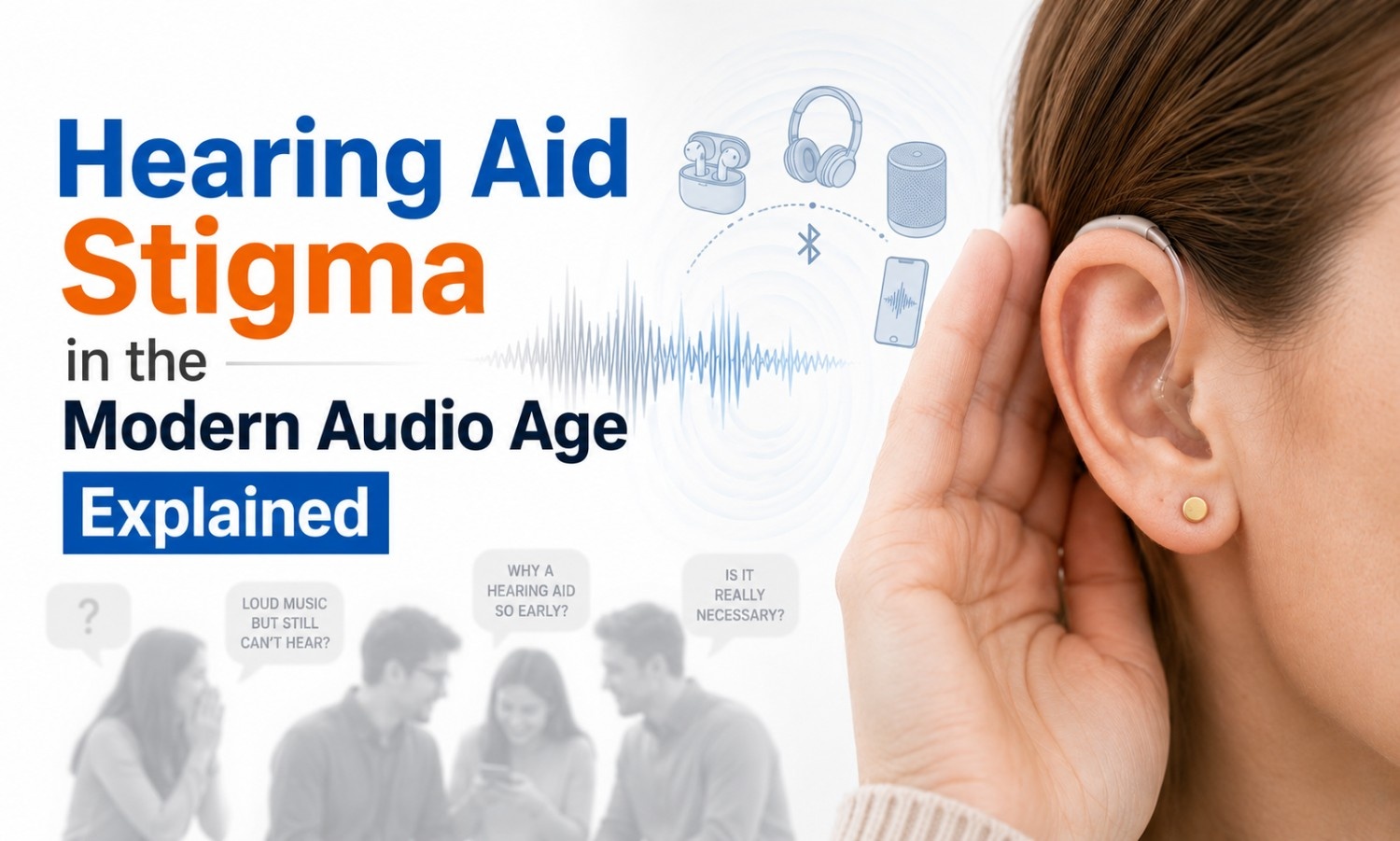
Hearing is a sense most of us don’t perceive as special, but its role, from cognitive development to maintenance, is a well-established truth. Hearing has a major role in our neural development as children; it lets us form pathways for communication and speech. There would be no speech without hearing, and cognitive developmental delays, along with personality disorders in children with hearing impairment, have been extensively studied and proven.
Hence, we have been trying very hard as a society to achieve early detection and intervention to improve our chances of avoiding such problems.
Unfortunately, there is still a significant gap between wanting to achieve a goal and actually getting there. Due to a lack of resources or awareness, many children go undetected, unable to fully reach their potential. Cost is a major factor for interventional options like cochlear implants, resulting in more than 90 percent of our country’s population never being able to get the surgery and the eventual post-procedure rehabilitation. There are very few government schemes available to them, and fewer people educating them about the programs available privately. Even in this AI generation, we haven’t been able to lower the cost of the device or make it widely available.
The recommendations for testing every neonate at birth have been followed widely across many developed nations to identify the problem and then make necessary adjustments to ensure overall global development. It is also followed in our country, though not as widely, as adequate resources have not been allocated. The discussion of why would become much more political than informative.
This incredible gift of hearing is ever-giving. It lets us communicate with our loved ones, appreciate music, and take critique. Speech is mimicking what we hear; we can only reproduce what we actually hear; isn’t that incredible? Think of how musicians or singers learn their craft: by hearing the same chord and trying to replicate it. They are so intertwined and help us manage our day-to-day communication, learning, memory, and emotions. Ever heard a particular song and had a trip down an emotional memory lane? It gives us the power to fully function, express ourselves, and fully integrate ourselves into society. Hearing loss is considered a significant disability; people who suffer from it lack socially acceptable communication skills, as their language has only a “need-to-learn” policy, which a lot of marginalized patients aren’t even privy to.
There are two types of systems in our ears, two different pathways that help us listen to and process the sounds we hear. The conductive pathway, which consists of the human body’s smallest bones, a shining eardrum, and a very complicated system of ligaments acting like pulleys and levers. Then there is the neural pathway, comprising two beautiful nerves, hair cells, and fluid, which act most fascinatingly in carrying forward the signal. Now, conductive hearing loss is considered more manageable surgically or through medical management, so it is more or less reversible in the maximum number of cases. Neural loss needs more urgent care and is most temperamental in terms of treatment response; very few neural pathologies have medical management options and will require aids, hence they are considered a more permanent kind of hearing loss.
In this era of anti-aging or reverse-aging, what we all have to realize is that cell turnover is inevitable. As of now, there are aids and supplements to support our aging bodies, but the proof in the form of the pudding isn’t available yet. The eventuality of hearing loss depends on our fortune of longevity and good health.
Coming to the inevitable hearing loss most of us will develop due to aging, there is a distinct lack of recent data regarding its prevalence in our country. Furthermore, there is a lack of studies being conducted on how the future is going to look for the digital generation and the digitally adapted generation, who are equally hooked to Bluetooth devices. These devices continuously keep blaring at us or cutting us off by creating inverted waves, which will eventually affect us. Age-old truths like “too much of a good thing will lead to something sinister” have been proven over and over again, especially in medical science. That is what makes us physicians wary about newer medications or techniques that haven’t been adequately studied or peer-reviewed.
Having said that, it still amuses me to see the stigma attached to age-related hearing loss and the aids that help manage it. I come from a generation where wearing corrective eyeglasses led to bullying and had its own stigma. Then there were contact lenses, and over that was LASIK surgery, eliminating the need for glasses. Then suddenly, wearing glasses became a cool thing to do, corrective or otherwise. What baffles me is how wearing noise-canceling headphones and earphones is looked at as being cool, or wanting to be unbothered, or as creating your very own personal space. Why does a device that is supposed to help us carry forward our day-to-day activities and necessities hold such a stigma in our society?
There is a World Hearing Day, but I cannot help but feel sometimes maybe it is just falling on deaf ears. Awareness is not helping take away the stigma. This need to be perceived as invincible will eventually lead to neurological regression, ultimately causing or worsening cognitive decline and dementia. This link has been robustly quantified in global health literature; notably, the Lancet Commission on Dementia continuously highlights unaddressed midlife hearing loss as the single largest modifiable risk factor for developing dementia, contributing significantly to accelerated cognitive decline. Despite this gravity, the issue is mostly overlooked as patients and families tend to adapt to it due to its nature of slow progression.
Also Read this:- Ear Pain During Air Travel
It starts with subtle changes, like requiring the television to be at higher volumes or a slow irritability. Needing to over-focus on conversations or adapting to lip-reading is a slow journey that takes up a lot of mental energy. The often-overlooked consequence is the social withdrawal that happens due to the immense effort required to hold a conversation. The associated shame and denial of the condition will often end with hollow-looking faces, lost in their own worlds.
On Cognitive Decline & Dementia Link: Livingston, G., Huntley, J., Liu, K. Y., et al. (2024). Dementia prevention, intervention, and care: 2024 report of the Lancet standing Commission. The Lancet, 404(10452), 572–628. (This study confirms hearing loss as the top modifiable midlife risk factor for dementia).
PMC – NIH
On Hearing Aid Impact on Cognition: Lin, F. R., Pike, J. R., Albert, M. S., et al. (2023). Hearing intervention versus health education control to reduce cognitive decline in older adults with hearing loss (ACHIEVE): a multicentre, randomised controlled trial. The Lancet, 402(10404), 786-797.
Taylor & Francis
On Stigma and Delayed Treatment: Wallhagen, M. I. (2010). The stigma of hearing loss. The Gerontologist, 50(1), 66–75. (A classic peer-reviewed paper addressing why vanity and ageism cause people to avoid hearing aids while accepting other technologies).
Also Read this:- An Unscratchable Itch: Why Not To Use Earbuds
Ready to Hear Life More Clearly in Gurgaon?
Don’t let hearing aid stigma stop you from enjoying meaningful conversations, professional success, and everyday confidence. If you’re experiencing hearing difficulties, consult experienced audiologists in Gurgaon and explore modern, discreet hearing aid solutions tailored to your needs.
Book Your Hearing Test in Gurgaon Today and Take the First Step Toward Better Hearing.