
Clearer Hearing, Healthier Living – Your Ears Deserve Expert Care!
Prioritize your hearing health schedule your ear checkup now.
Clearer Hearing, Healthier Living – Your Ears Deserve Expert Care!
Prioritize your hearing health schedule your ear checkup now.
Expert Hearing Evaluation Services by ENT Specialists in Gurgaon
The ear is much more than just a sensory organ for hearing. Its role in balance, communication, protection, and emotional connection makes it indispensable for our overall well-being. Whether it’s hearing a loved one’s voice, maintaining equilibrium, or staying alert to potential danger, the ear is essential for navigating the world around us. Taking care of ear health is important, and if you notice any hearing or balance issues, seeking medical advice from an ENT specialist is crucial to prevent long-term damage or complications.
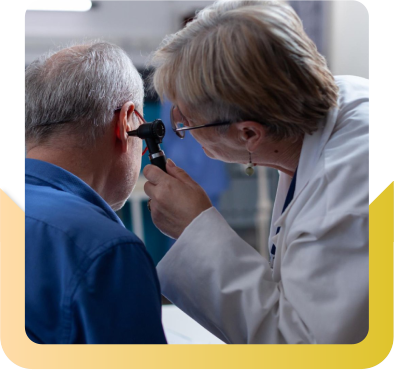
Otoendoscopy

Otomicroscopy

Wax Removal

Furuncle Treatment

Fungal Infection Treatment
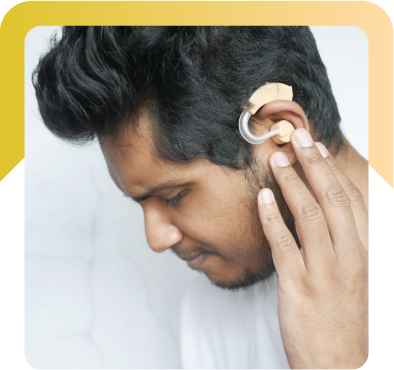
Grommet Insertion
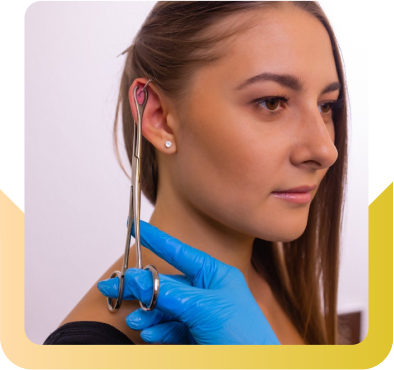
Ear Piercing

Keloid Excision

Biopsy

Vertigo Assessment

Foreign Body Removal

OPD Services
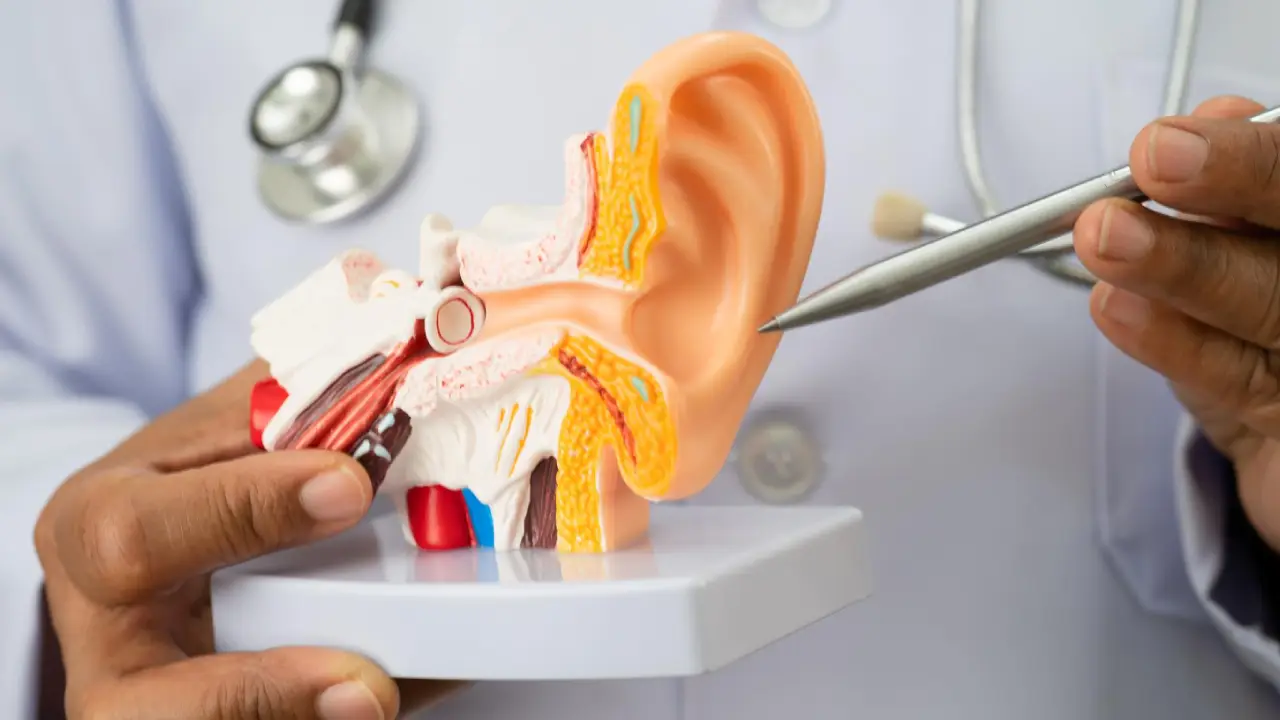
Each part of the ear works in harmony to process sound and help maintain balance, making the ear a vital organ for sensory perception and physical stability.
Outer Ear:
- Pinna (Auricle): Funnels sound into the ear.
- Ear Canal: Directs sound to the eardrum; produces earwax.
- Eardrum (Tympanic Membrane): Vibrates in response to sound waves.
Middle Ear:
- Ossicles (Malleus, Incus, Stapes): Amplify and transmit sound vibrations.
- Eustachian Tube: Equalizes pressure in the middle ear.
Inner Ear:
- Cochlea: Converts sound vibrations into electrical signals.
- Auditory Nerve: Transmits electrical signals to the brain.
- Vestibular System: Helps maintain balance.
- Oval Window: Transfers sound vibrations to the cochlea.
1. External Ear Disorders
These affect the outermost structures of the ear the pinna and ear canal.
Ear Infections (Otitis Externa)
- Cause: Bacterial or fungal infections in the ear canal, often due to moisture (e.g., swimming).
- Symptoms: Itching, pain, redness, discharge.
- Treatment: Antibiotic or antifungal ear drops.
Earwax Buildup (Cerumen Impaction)
- Cause: Overproduction of earwax, often from using cotton swabs or narrow ear canals.
- Symptoms: Hearing loss, earache, ringing (tinnitus).
- Treatment: Ear drops, irrigation, or professional removal.
Foreign Objects in the Ear
- Cause: Objects like beads, insects, or cotton swabs lodged in the ear canal.
- Symptoms: Pain, hearing loss, discomfort.
- Treatment: Professional removal by a doctor.
Trauma or Injury to the Ear Canal
- Cause: Physical injury to the ear, such as from blunt force or inserting objects.
- Symptoms: Pain, bleeding, possible hearing loss.
- Treatment: Pain management, medical intervention for severe injuries.
Perichondritis
- Cause: Infection of the pinna (outer ear), often due to trauma, piercings, or surgery.
- Symptoms: Redness, swelling, pain in the outer ear.
- Treatment: Antibiotics, drainage in severe cases.
Tinnitus (Ringing in the Ears)
- Cause: Earwax impaction, infection, or damage to ear structures.
- Symptoms: Ringing, buzzing, or hissing sounds in the ear.
- Treatment: Address underlying causes, sound therapy, or tinnitus retraining.
Otomycosis (Fungal Infection)
- Cause: Fungal infections in the ear canal, often after prolonged moisture exposure.
- Symptoms: Itching, thick discharge, pain.
- Treatment: Antifungal ear drops, keeping the ear dry.
Skin Conditions (Eczema, Psoriasis)
- Cause: Inflammatory skin conditions affecting the ear canal or outer ear.
- Symptoms: Redness, irritation, scaling, itching.
- Treatment: Topical steroids, moisturizers.
2. Middle Ear Disorders
Outer Ear:
- Pinna (Auricle): Funnels sound into the ear.
- Ear Canal: Directs sound to the eardrum; produces earwax.
- Eardrum (Tympanic Membrane): Vibrates in response to sound waves.
Middle Ear:
- Ossicles (Malleus, Incus, Stapes): Amplify and transmit sound vibrations.
- Eustachian Tube: Equalizes pressure in the middle ear.
Inner Ear:
- Cochlea: Converts sound vibrations into electrical signals.
- Auditory Nerve: Transmits electrical signals to the brain.
- Vestibular System: Helps maintain balance.
- Oval Window: Transfers sound vibrations to the cochlea.
3. Inner Ear Disorders
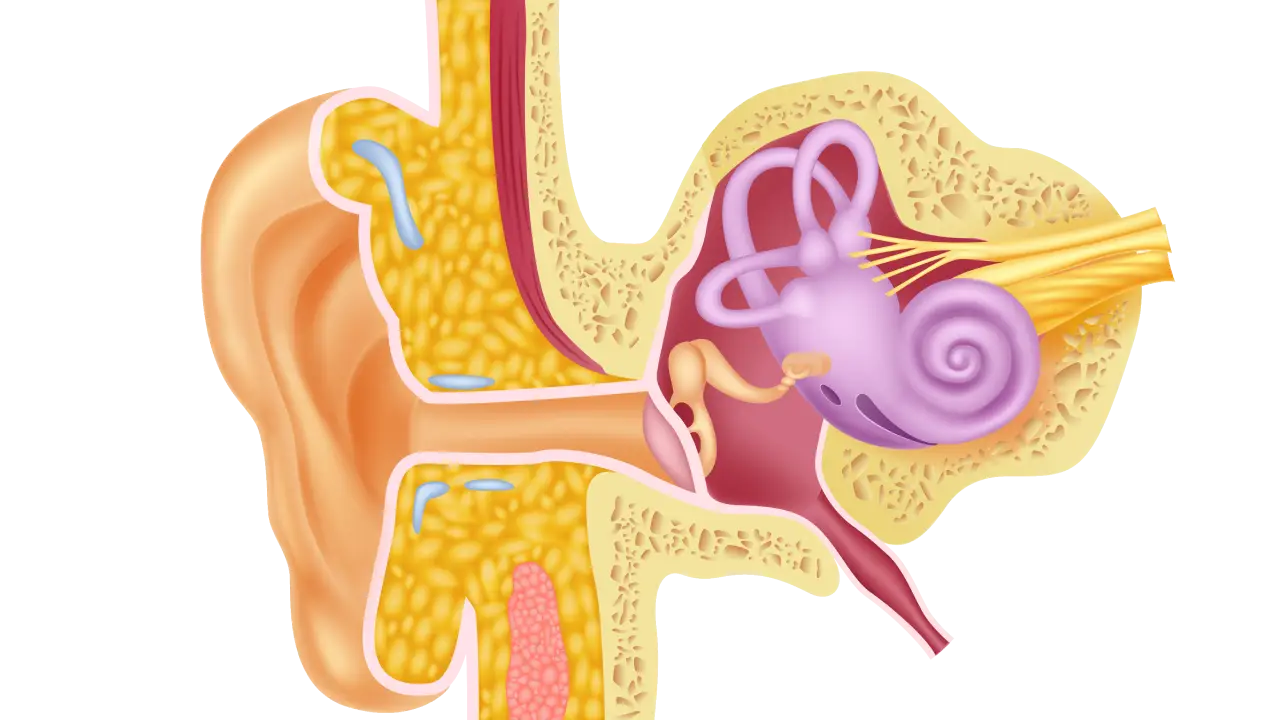
These affect the structures involved in hearing and balance, including the cochlea and the vestibular system.
Sensorineural Hearing Loss
- Cause: Damage to the cochlea or auditory nerve, often due to aging (presbycusis), noise exposure, or genetic factors.
- Symptoms: Progressive hearing loss, difficulty understanding speech.
- Treatment: Hearing aids, cochlear implants.
Meniere’s Disease
- Cause: Fluid buildup in the inner ear leading to episodes of vertigo, hearing loss, and tinnitus.
- Symptoms: Dizziness (vertigo), ringing in the ears (tinnitus), hearing loss.
- Treatment: Diuretics, vestibular therapy, dietary changes, or surgery.
Labyrinthitis
- Cause: Inflammation of the inner ear, often following a viral infection (e.g., flu).
- Symptoms: Sudden vertigo, hearing loss, balance issues.
- Treatment: Antiviral or antibiotic medications, vestibular rehabilitation.
Acoustic Neuroma
- Cause: A benign tumor on the auditory nerve.
- Symptoms: Hearing loss, tinnitus, dizziness, facial weakness.
- Treatment: Surgery or radiation therapy.
Vestibular Disorders (e.g., Benign Paroxysmal Positional Vertigo)
- Cause: Disruption in the vestibular system (inner ear balance structures).
- Symptoms: Dizziness or vertigo, imbalance, nausea.
- Treatment: Vestibular rehabilitation, maneuvers to reposition ear crystals (in BPPV).
Ototoxicity
- Cause: Damage to the inner ear due to medications (e.g., certain antibiotics or chemotherapy drugs).
- Symptoms: Hearing loss, tinnitus, balance issues.
Treatment: Discontinuing the offending drug (if possible), hearing aids.
Commonly performed investigations for the ear:
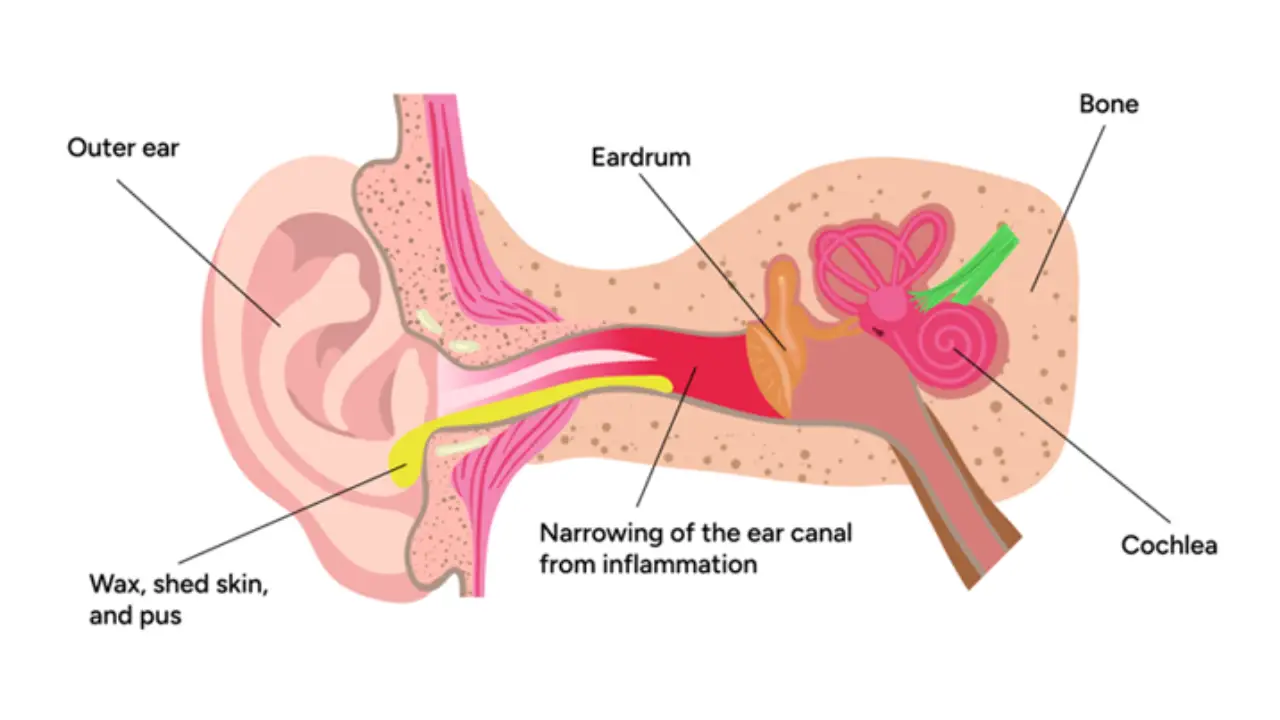
Otoscopy/ Endoscopy/ Microscopy
- Purpose: To examine the outer ear canal and eardrum for signs of infection, earwax buildup, perforation, or other abnormalities.
Audiometry (Hearing Test)
- Purpose: To assess the patient’s hearing ability and determine the type and severity of hearing loss.
Tympanometry
- Purpose: To evaluate the middle ear and eardrum function, specifically checking for fluid, eustachian tube dysfunction, or perforated eardrums.
Acoustic Reflex Testing
- Purpose: To measure the contraction of the middle ear muscles (specifically the stapedius muscle) in response to loud sounds. It helps assess the integrity of the auditory pathway from the ear to the brainstem.
Otoacoustic Emissions (OAE) Test
- Purpose: To assess the function of the cochlea (inner ear) and its ability to produce sound (emissions) in response to sound stimulation.
CT Scan or MRI (Imaging)
- Purpose: To provide detailed images of the ear’s anatomy, particularly for diagnosing complex issues in the middle or inner ear, such as tumors, infections, or structural problems.
Common OPD procedures:
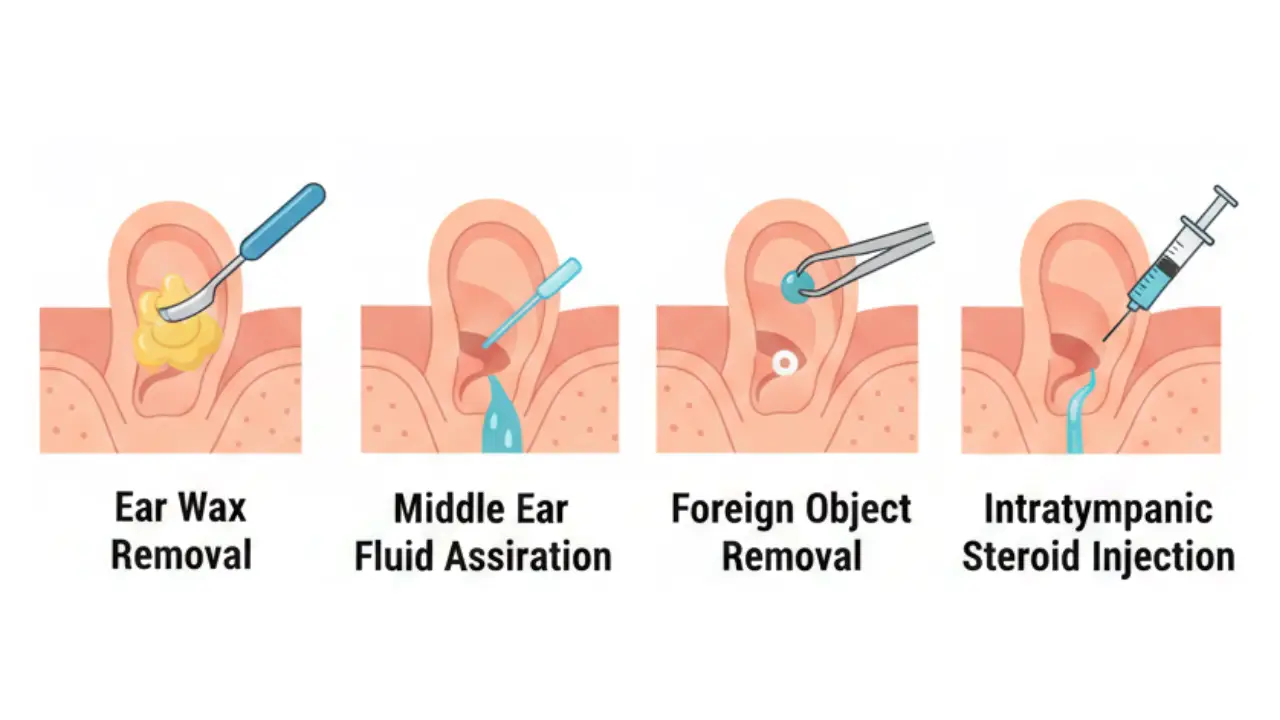
Ear Wax Removal (Cerumen Removal)
- Purpose: To clear the ear canal of excess earwax (cerumen) that may cause discomfort, hearing loss, or blockages.
- Procedure: Suction: A gentle suction device is used to remove wax from the ear canal.
- Indications: Hearing loss, discomfort, ear infections, or prior to conducting other ear tests.
Tympanocentesis (Middle Ear Fluid Aspiration)
- Purpose: To drain infected fluid or pus from the middle ear in cases of severe infection.
- Procedure: A needle is inserted through the eardrum to remove fluid from the middle ear for culture and analysis.
- Indications: Severe otitis media or persistent fluid buildup after an ear infection.
Foreign Body Removal (from the Ear Canal)
- Purpose: To remove foreign objects that may have been inserted into the ear canal (such as cotton swabs, insects, beads, etc.).
- Procedure: The ENT specialist may use special instruments, such as forceps or suction, or in some cases, ear irrigation, to safely remove the foreign body.
- Indications: Ear discomfort, hearing loss, or the presence of a foreign object in the ear canal.
Injection of Steroid or Medication into the Middle Ear
Purpose: To treat conditions like sudden sensorineural hearing loss or chronic middle ear problems.
- Procedure:
- A steroid or other medication is injected directly into the middle ear through the eardrum, which may help reduce inflammation or treat infections.
- Indications: Sudden hearing loss, Meniere’s disease, or chronic middle ear conditions.
Ear piercing / Ear lobe repair
- Purpose: To repair torn ear lobes due to trauma or usage of heavy earrings. To create a new piercing.
- Procedure:
- Done under local anesthesia with proper asceptic precautions.
- Indications: loose hole, torn ear lobe or maligned piercings.
Surgical procedures:
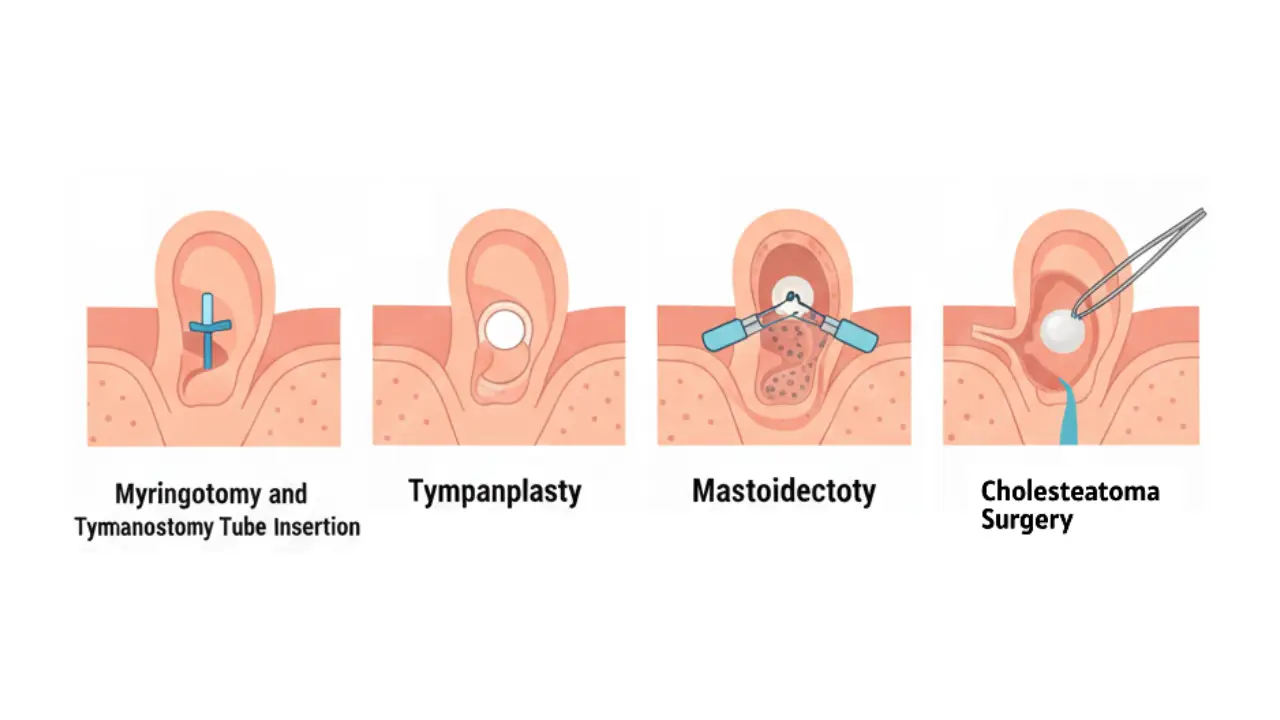
- Myringotomy and Tympanostomy Tube Insertion
- Purpose: To treat chronic middle ear infections (otitis media) or fluid buildup in the middle ear.
- Procedure: A small incision is made in the eardrum to drain fluid or pus. In some cases, a small tube (PE tube) is inserted into the eardrum to help maintain drainage and equalize pressure in the middle ear.
- Indications: Recurrent ear infections, fluid buildup, hearing loss, or Eustachian tube dysfunction.
- Tympanoplasty
- Purpose: To repair a perforated (torn) eardrum and improve hearing.
- Procedure: A surgical patch or graft is used to repair the eardrum after removing any infected tissue. The procedure restores the eardrum’s integrity and helps prevent recurrent infections.
- Indications: Perforated eardrum due to trauma, infection, or disease.
- Mastoidectomy
- Purpose: To remove infected mastoid air cells in cases of chronic ear infections or mastoiditis.
- Procedure: The mastoid bone, located behind the ear, is accessed, and infected tissue is removed to prevent further infection and complications.
- Indications: Chronic mastoid infections, cholesteatoma, or severe otitis media.
- Cholesteatoma Surgery
- Purpose: To remove a cholesteatoma, an abnormal growth of skin cells in the middle ear that can lead to hearing loss and infections.
- Procedure: The cholesteatoma is surgically removed from the middle ear, and any damage caused by the growth is repaired.
- Indications: Cholesteatoma causing recurrent infections, hearing loss, or damage to the ossicles.
- Cochlear Implant Surgery
- Purpose: To treat severe sensorineural hearing loss or deafness by bypassing damaged parts of the inner ear.
- Procedure: A small electronic device is implanted into the inner ear to stimulate the auditory nerve directly, providing a sense of sound to individuals who don’t benefit from traditional hearing aids.
- Indications: Profound hearing loss in individuals who cannot benefit from hearing aids.
- Stapedectomy (Stapes Surgery)
- Purpose: To treat otosclerosis, a condition where the stapes bone in the middle ear becomes fixed and cannot vibrate properly, leading to hearing loss.
- Procedure: The immobilized stapes bone is removed and replaced with a prosthetic device to restore hearing.
- Indications: Conductive hearing loss due to otosclerosis.
- Acoustic Neuroma Surgery
- Purpose: To remove a benign tumor (acoustic neuroma) from the vestibulocochlear nerve, which can affect hearing and balance.
- Procedure: The tumor is surgically removed, often through a small incision behind the ear or through the skull.
- Indications: Acoustic neuromas causing hearing loss, tinnitus, or balance problems.
- Eustachian Tube Surgery (Eustachian Tube Dysfunction Surgery)
- Purpose: To treat chronic Eustachian tube dysfunction, where the tube connecting the middle ear to the throat is blocked or doesn’t function properly, causing ear pressure, pain, and fluid buildup.
- Procedure: A procedure such as Eustachian tube balloon dilation may be performed to open the tube and restore normal pressure regulation in the ear.
- Indications: Chronic middle ear infections, fluid buildup, or ear pressure due to Eustachian tube dysfunction.
- Vestibular Nerve Sectioning(for Balance Disorders)
- Purpose: To treat severe vertigo or balance disorders that don’t respond to other treatments.
- Procedure: The vestibular nerve, responsible for balance, is surgically cut to stop the signals causing dizziness.
- Indications: Severe vertigo from vestibular disorders like Meniere’s disease or bilateral vestibular loss.
- Facial Nerve Surgery:
- Purpose: to bring back facial symmetry and restore nerve function.
- Procedure: the nerve is identified through mastoid drilling the damaged part of the nerve is either decompressed or in severe injuries grafting is done.
- Indications: Facial deformity due to nerve damage in the mastoid segment.
Our Recent Blogs
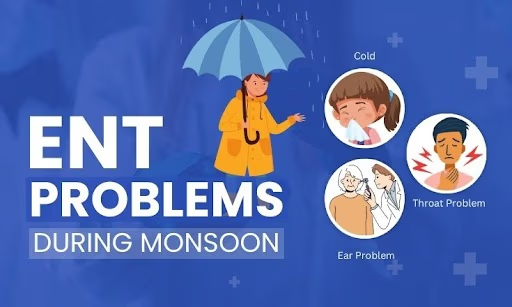
Monsoons are very heartily welcomed and always have brought joy, abundance of life and vegetation but alongside comes illness and

Not everyone will visit an ENT in their lifetime, they never might have been affected or they are blissfully unaware

Children are very resilient. From the age of 6 months to 2 years, a child has a developing immune system

It is the most commonly self diagnosed and self treated condition. It is estimated that one in every 8th person

Snoring is the resultant sound that occurs when two relaxed surfaces collapse into each other during a sleep cycle. Snoring

Have you experienced that nagging or intense pain during take off which settled down over the course of flight only