
Head and neck conditions require careful evaluation and precise diagnosis.
Head and neck conditions require careful evaluation and precise diagnosis.
We provide comprehensive assessment and treatment for various head and neck disorders affecting glands, soft tissues, lymph nodes, and surrounding structures.
Head & Neck complaints ENT
Head and neck cancers are a diverse group of diseases that can affect the mouth, throat, larynx, sinuses, salivary glands, and thyroid. Early diagnosis and prompt treatment, including surgery, radiation, chemotherapy, and targeted therapies, are critical for improving survival rates and quality of life. If you experience symptoms like persistent pain, difficulty swallowing, or changes in your voice, it’s important to seek medical advice early. A healthcare provider can guide you through the appropriate diagnostic
Head and neck cancers are a group of cancers that develop in the tissues of the head and neck region, including the mouth, throat, voice box (larynx), sinuses, salivary glands, and the nasal cavity. These cancers can occur in a variety of tissues, including the squamous cells that line the head and neck structures. Early diagnosis and treatment are critical for improving survival rates and quality of life.
Key Areas Affected by Head and Neck Cancers:
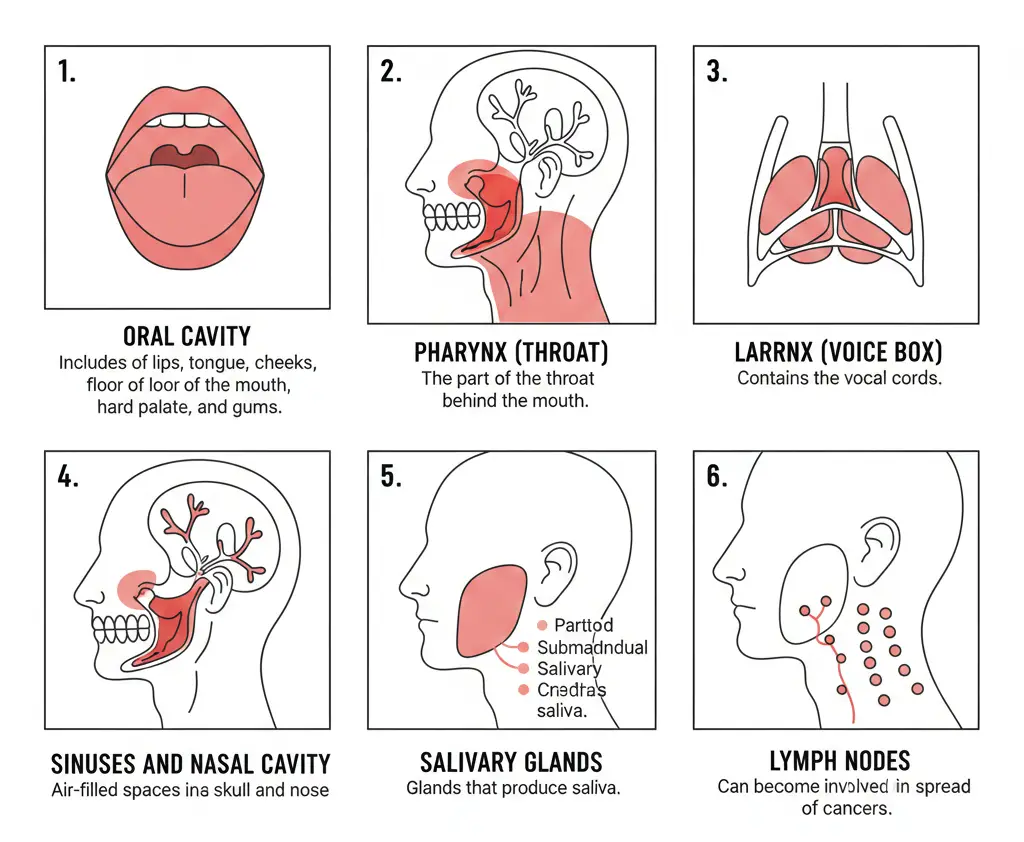
- Oral Cavity: Includes the lips, tongue, cheeks, floor of the mouth, hard palate, and gums.
- Pharynx (Throat): The part of the throat behind the mouth, which includes the nasopharynx (upper part), oropharynx (middle part), and hypopharynx (lower part).
- Larynx (Voice Box): Contains the vocal cords and is responsible for speech and breathing.
- Sinuses and Nasal Cavity: The air-filled spaces in the skull and the passages inside the nose.
- Salivary Glands: Glands that produce saliva, including the parotid glands, submandibular glands, and sublingual glands.
- Lymph Nodes: Though not directly part of the head and neck organs, lymph nodes in the neck can become involved in the spread of head and neck cancers.
Common Types of Head and Neck Cancers
Oral Cancer
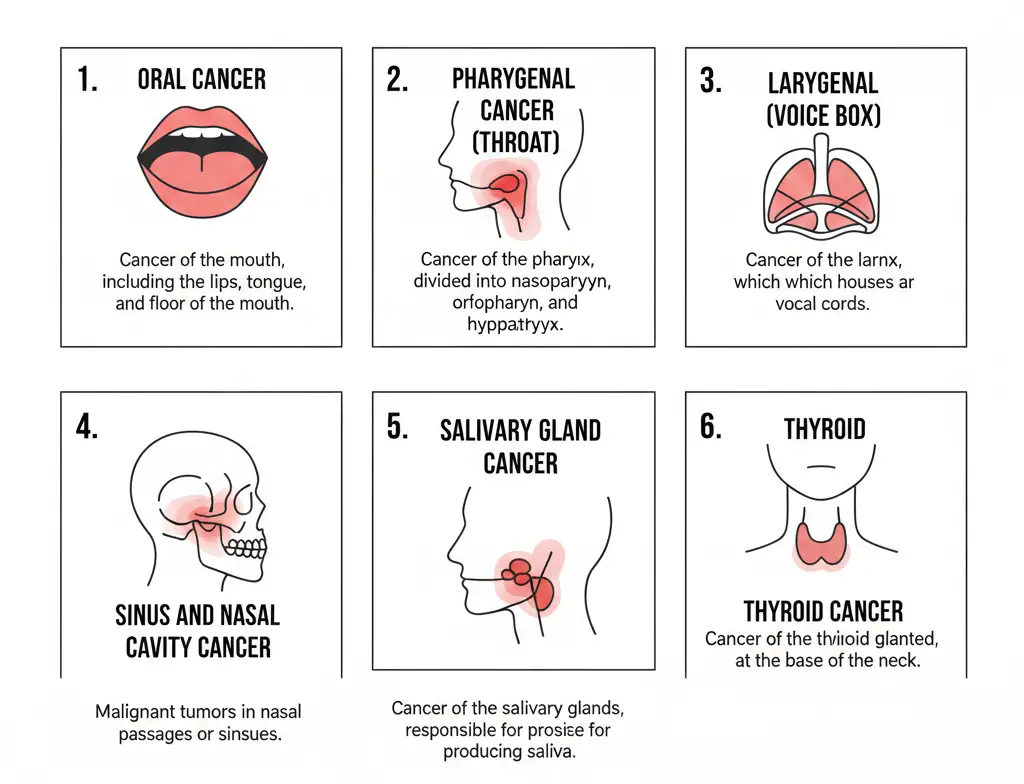
- Description: Cancer of the mouth, including the lips, tongue, and floor of the mouth.
- Risk Factors: Tobacco use, heavy alcohol consumption, human papillomavirus (HPV) infection, and sun exposure.
- Symptoms: Sores or ulcers that do not heal, pain or difficulty swallowing, lumps or thickening in the mouth, ear pain.
- Treatment: Surgery to remove tumors, radiation therapy, chemotherapy, or a combination of these.
Throat Cancer (Pharyngeal Cancer)
- Description: Cancer that occurs in the pharynx (throat), which is divided into three parts: nasopharynx, oropharynx, and hypopharynx.
- Risk Factors: Smoking, alcohol consumption, HPV infection, and gastroesophageal reflux disease (GERD).
- Symptoms: Persistent sore throat, difficulty swallowing, hoarseness, ear pain, lumps in the neck.
- Treatment: Surgery, radiation therapy, chemotherapy, or a combination, depending on the stage and location of the cancer.
Laryngeal Cancer (Voice Box Cancer)
- Description: Cancer of the larynx, which houses the vocal cords.
- Risk Factors: Smoking, alcohol use, and exposure to certain chemicals or irritants.
- Symptoms: Hoarseness, loss of voice, sore throat, difficulty swallowing, ear pain.
- Treatment: Surgery to remove tumors, radiation therapy, chemotherapy, or voice therapy in some cases. Advanced cases may require partial or total removal of the larynx (laryngectomy).
Sinus and Nasal Cavity Cancer
- Description: Malignant tumors that develop in the nasal passages or sinuses.
- Risk Factors: Smoking, chemical exposures, and HPV infection.
- Symptoms: Nasal blockage, persistent sinus congestion, nosebleeds, facial pain or swelling, changes in vision.
- Treatment: Surgery, radiation therapy, chemotherapy, or a combination of these treatments.
Salivary Gland Cancer
- Description: Cancer that develops in the salivary glands, which are responsible for producing saliva.
- Risk Factors: Exposure to radiation, certain genetic conditions, and age.
- Symptoms: Swelling or a lump near the jaw or neck, difficulty swallowing, dry mouth, facial numbness or weakness.
- Treatment: Surgery to remove the tumor, radiation therapy, and possibly chemotherapy.
Thyroid Cancer
- Description: Cancer of the thyroid gland, located at the base of the neck.
- Risk Factors: Exposure to radiation, family history, certain genetic conditions.
- Symptoms: A lump or nodule in the neck, difficulty swallowing or breathing, pain in the neck or throat, hoarseness.
- Treatment: Surgery to remove the thyroid, radiation therapy, and possibly thyroid hormone replacement therapy.
Risk Factors for Head and Neck Cancers
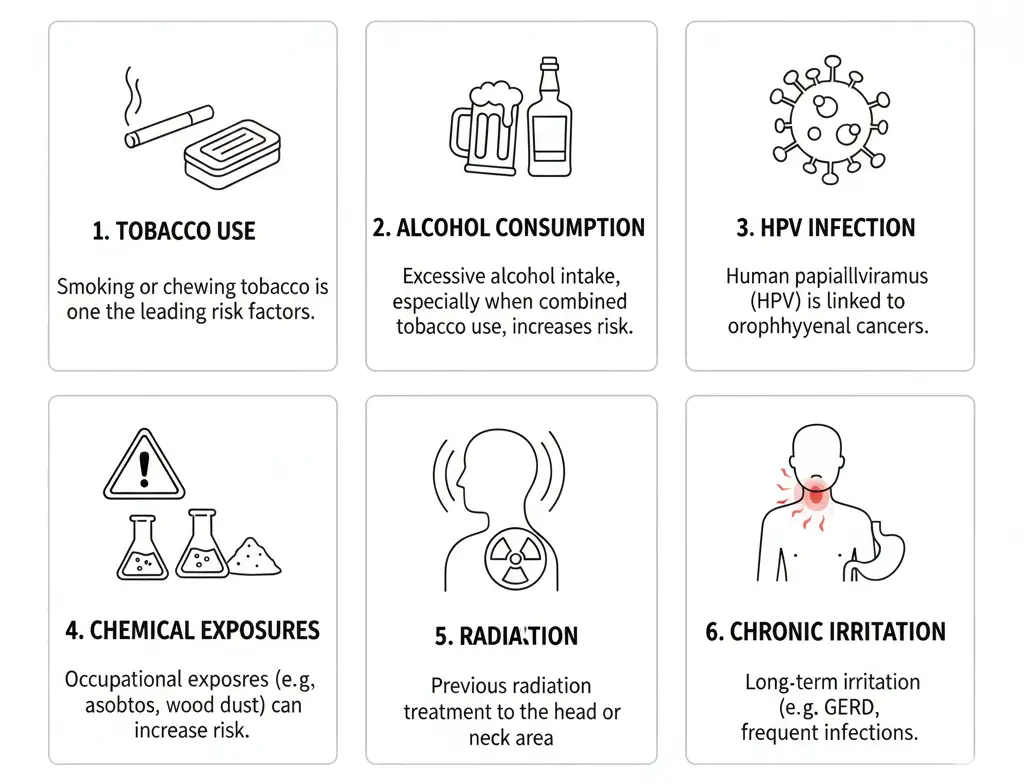
Several factors can increase the risk of developing head and neck cancers:
- Tobacco Use: Smoking or chewing tobacco is one of the leading risk factors.
- Alcohol Consumption: Excessive alcohol intake, especially when combined with tobacco use, increases the risk.
- HPV Infection: The human papillomavirus, particularly HPV-16, is linked to oropharyngeal cancers (cancer of the throat and tonsils).
- Exposure to Chemicals: Certain occupational exposures, such as to asbestos or wood dust, can increase risk.
- Radiation Exposure: Previous radiation treatment to the head or neck area may increase the risk of developing cancers in these regions.
- Genetic Factors: A family history of head and neck cancers or genetic conditions like Li-Fraumeni syndrome can increase risk.
- Chronic Irritation: Long-term irritation of the mouth or throat due to conditions like GERD (acid reflux) or frequent infections may increase the risk.
Common Investigations for Head and Neck Cancer
To diagnose head and neck cancers, doctors may perform several investigations:
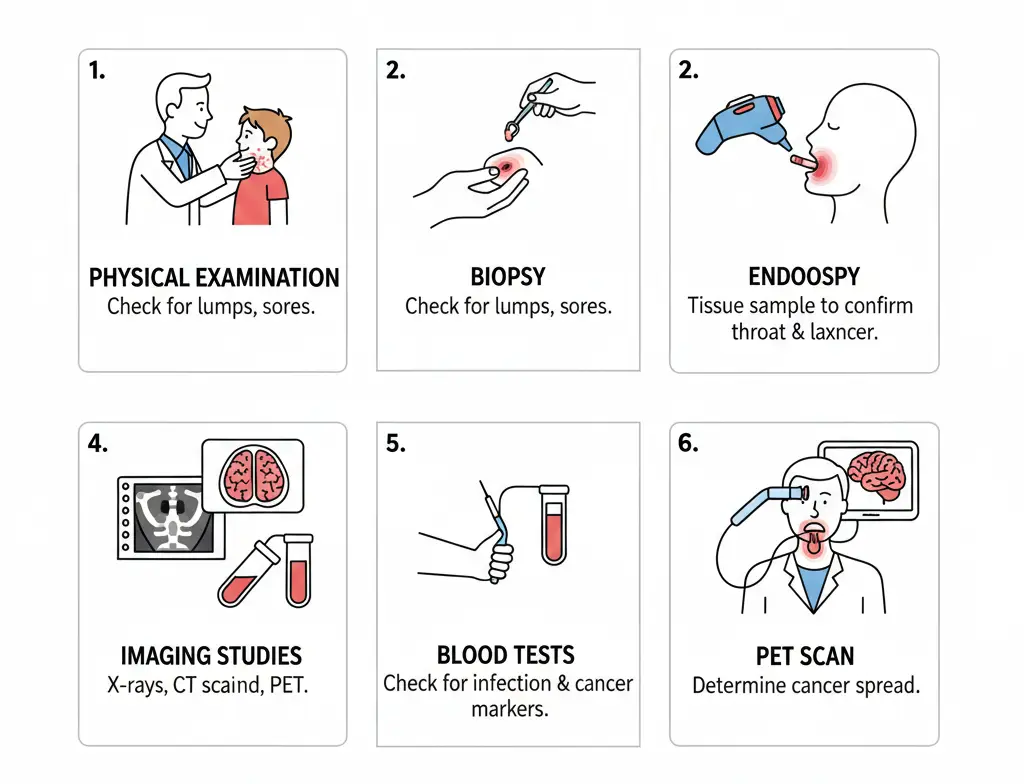
- Physical Examination: A thorough examination of the head and neck to check for lumps, sores, or abnormal tissue.
- Biopsy: A sample of tissue from a suspected tumor is taken for examination to confirm the presence of cancer cells.
- Endoscopy: A flexible tube with a camera (endoscope) is used to examine the throat, larynx, and other areas for signs of cancer.
- Imaging Studies:
- X-rays or CT scans: For detailed images of the sinuses, neck, and throat.
- MRI: To get more detailed images of soft tissues and help in staging the cancer.
- Ultrasound: To assess lymph nodes in the neck or salivary glands for potential cancer spread.
- PET Scan: Used to determine whether cancer has spread to other parts of the body.
- Blood Tests: To look for signs of infection, inflammation, or cancer markers.
Treatment Options for Head and Neck Cancer
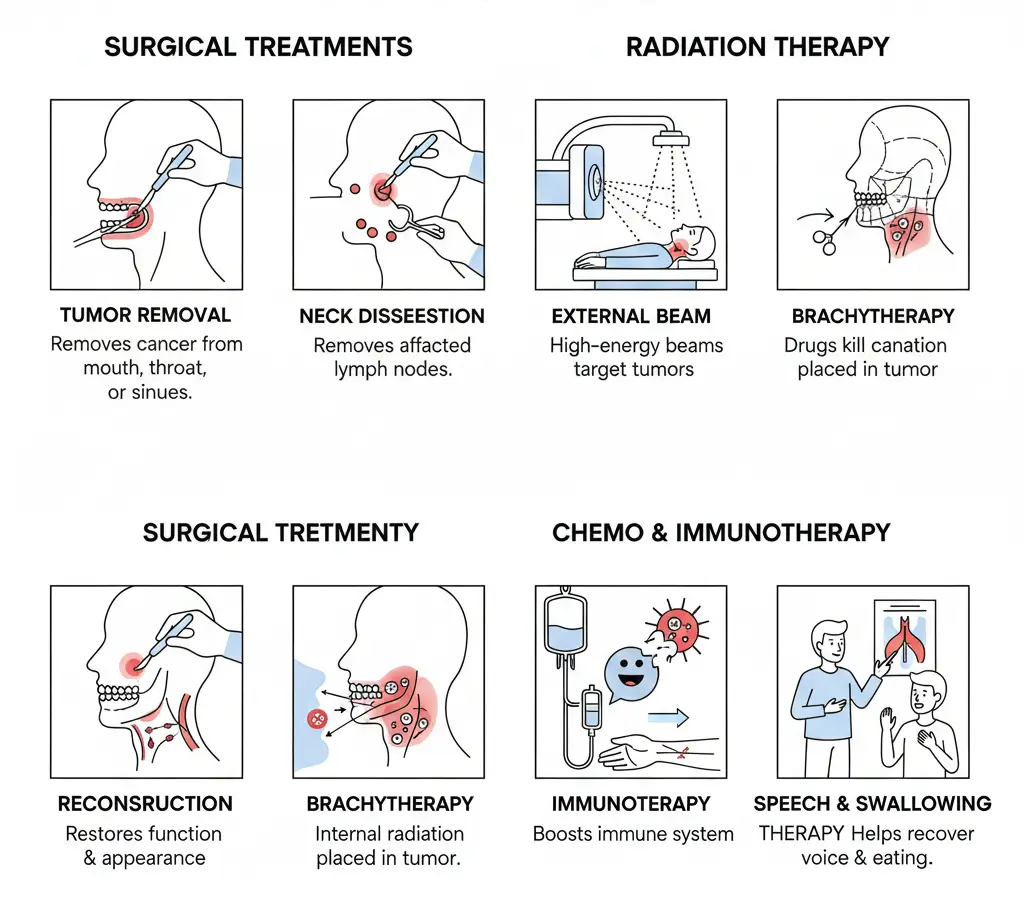
Surgical Treatments:
- Tumor Removal: Surgery is often used to remove the tumor and surrounding tissue. This is especially important for cancers in the oral cavity, larynx, and sinuses.
- Neck Dissection: If cancer has spread to the lymph nodes in the neck, surgery may be required to remove them.
- Reconstruction Surgery: After tumor removal, reconstructive surgery may be needed to restore function and appearance, especially if parts of the mouth, throat, or larynx are removed.
Radiation Therapy:
- External Beam Radiation: High-energy rays are directed at the cancer cells to shrink or eliminate the tumor.
- Brachytherapy: A type of internal radiation therapy, where radioactive material is placed directly into or near the tumor.
- Adjuvant Radiation: Sometimes used after surgery to kill any remaining cancer cells and reduce the risk of recurrence.
Chemotherapy:
- Systemic Chemotherapy: Chemotherapy drugs target cancer cells that have spread to other parts of the body.
- Chemoradiation: A combination of chemotherapy and radiation therapy is sometimes used to increase the effectiveness of treatment.
Targeted Therapy and Immunotherapy:
- Targeted Therapy: Drugs that target specific molecules involved in the growth of cancer cells. Used in some cases of advanced head and neck cancers.
- Immunotherapy: Boosts the body’s immune system to fight cancer. It is sometimes used for cancers caused by HPV.
Speech and Swallowing Therapy:
- After surgery or radiation, patients may need speech and swallowing therapy to help recover these functions, particularly if the larynx or oral cavity has been affected.
Our Recent Blogs
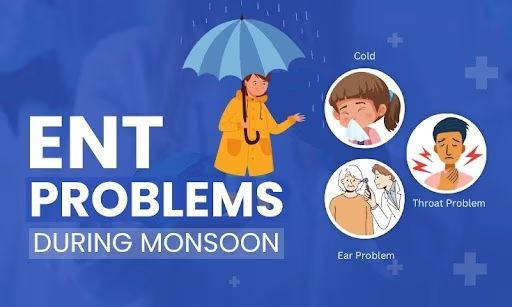
Monsoons are very heartily welcomed and always have brought joy, abundance of life and vegetation but alongside comes illness and

Not everyone will visit an ENT in their lifetime, they never might have been affected or they are blissfully unaware

Children are very resilient. From the age of 6 months to 2 years, a child has a developing immune system

It is the most commonly self diagnosed and self treated condition. It is estimated that one in every 8th person

Snoring is the resultant sound that occurs when two relaxed surfaces collapse into each other during a sleep cycle. Snoring

Have you experienced that nagging or intense pain during take off which settled down over the course of flight only