
Early diagnosis ensures timely treatment
Prioritize your hearing health schedule your ear checkup now.
Early diagnosis ensures timely treatment
Prioritize your hearing health schedule your ear checkup now.
Consultation
Pediatric ENT
Pediatric ENT problems are common but treatable. Early diagnosis and intervention can significantly improve a child’s quality of life. Whether it’s ear infections, allergies, or breathing issues, there are numerous medical and surgical options available to help manage these conditions. For the best care, always consult with a pediatric ENT specialist.
The Ear, Nose, and Throat (ENT) system in children is vital for many essential functions, including hearing, breathing, eating, and speaking. Pediatric ENT problems are common and can affect a child’s quality of life. Timely diagnosis and treatment are crucial for healthy development.
Key Functions of the Pediatric ENT System:
- Hearing: The ears allow children to hear and process sounds, which is crucial for language development.
- Breathing: The nose and throat help with airflow to the lungs.
- Swallowing and Eating: The throat plays a key role in the safe passage of food from the mouth to the stomach.
- Speech: The throat and vocal cords are essential for speech development.

Common Pediatric ENT Disorders
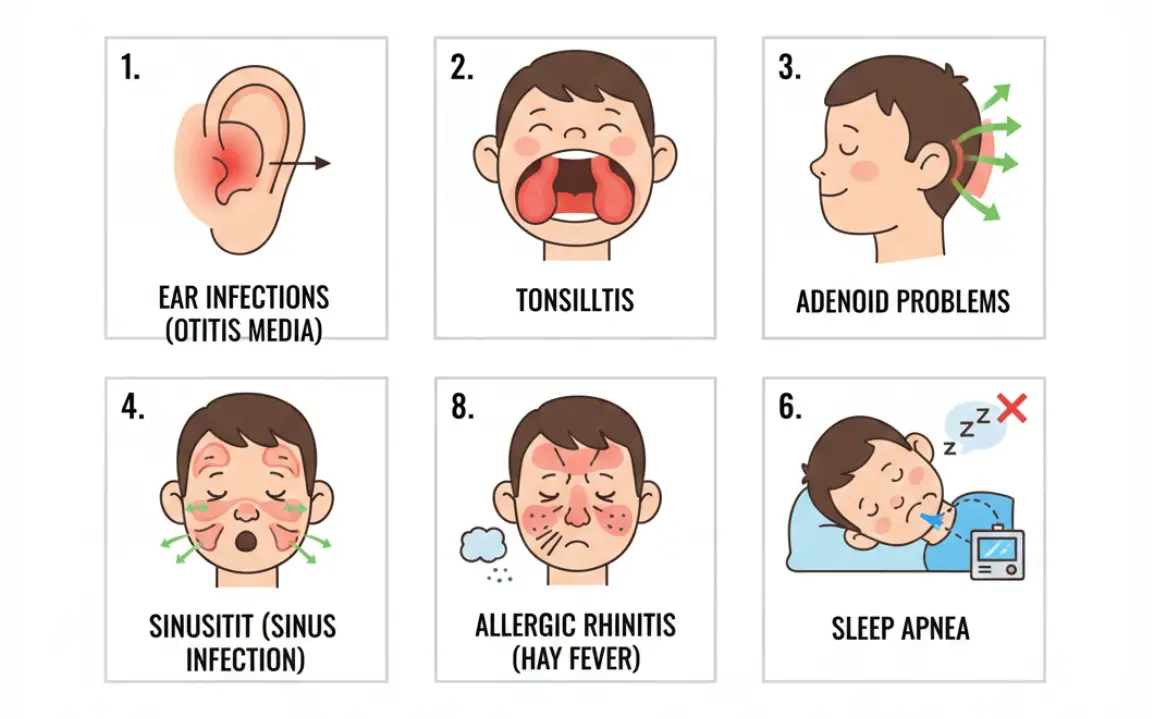
Ear Infections (Otitis Media)
- Description: Infections in the middle ear, often caused by bacteria or viruses.
- Symptoms: Ear pain, fussiness, difficulty hearing, fever, drainage from the ear.
- Treatment: Often treated with antibiotics if bacterial. Pain relievers like acetaminophen can help with discomfort. Surgery (myringotomy) may be needed for recurrent infections or fluid buildup.
Tonsillitis
- Description: Inflammation of the tonsils, which are lymph nodes located at the back of the throat.
- Symptoms: Sore throat, difficulty swallowing, fever, swollen tonsils, bad breath.
- Treatment: Antibiotics for bacterial infections. For frequent or severe cases, a tonsillectomy (removal of the tonsils) may be recommended.
Adenoid Problems
- Description: The adenoids are lymphoid tissue located behind the nose. They can become enlarged and cause breathing or swallowing issues.
- Symptoms: Chronic nasal congestion, mouth breathing, snoring, sleep apnea, frequent ear infections.
- Treatment: Medications (decongestants, nasal steroids) to reduce swelling. Adenoidectomy (removal of the adenoids) may be needed in severe cases.
Sinusitis (Sinus Infection)
- Description: Inflammation or infection of the sinuses, usually following a cold.
- Symptoms: Nasal congestion, thick nasal discharge, cough, headache, facial pain or tenderness.
- Treatment: Saline nasal sprays, decongestants, and sometimes antibiotics for bacterial infections.
Allergic Rhinitis (Hay Fever)
- Description: Allergies cause inflammation in the nasal passages, leading to sneezing, congestion, and itchy nose.
- Symptoms: Sneezing, runny nose, itchy eyes, nasal congestion.
- Treatment: Antihistamines, nasal steroids, and avoiding allergens. In some cases, allergy testing and immunotherapy (allergy shots) may be used.
Sleep Apnea
- Description: A condition where the airway becomes partially or completely blocked during sleep, leading to pauses in breathing.
- Symptoms: Loud snoring, gasping for air during sleep, daytime tiredness, difficulty waking up.
- Treatment: Adenoidectomy and tonsillectomy are common treatments for children with sleep apnea. For more severe cases, CPAP (Continuous Positive Airway Pressure) therapy may be used.
Hoarseness and Vocal Cord Disorders
- Description: Problems with the vocal cords that cause changes in the voice, often due to excessive use, infection, or irritation.
- Symptoms: Hoarse voice, loss of voice, difficulty speaking or making sounds.
- Treatment: Vocal rest, hydration, and avoiding irritants. Speech therapy may be beneficial in some cases.
Common Investigations for Pediatric ENT Disorders
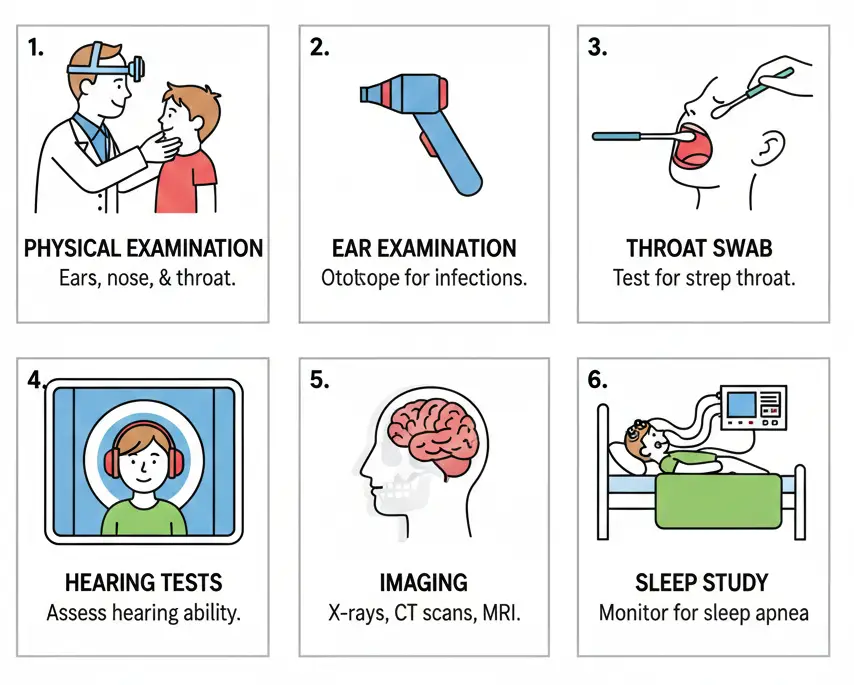
- To diagnose ENT disorders in children, various investigations may be used:
- Physical Examination: The ENT specialist will examine the ears, nose, and throat for signs of infection or abnormalities.
- Ear Examination: Using an otoscope to check for ear infections, fluid buildup, or damage to the eardrum.
- Throat Swab: A sample from the throat may be taken to test for bacterial infections like strep throat.
- Hearing Tests: Audiometry is used to assess hearing ability and detect hearing loss.
- Imaging: X-rays, CT scans, or MRI may be used for more complex issues such as sinus problems, enlarged adenoids, or ear abnormalities.
- Sleep Study (Polysomnography): For children suspected of having sleep apnea, a sleep study may be performed to monitor breathing patterns during sleep.
Treatment Options for Pediatric ENT Disorders
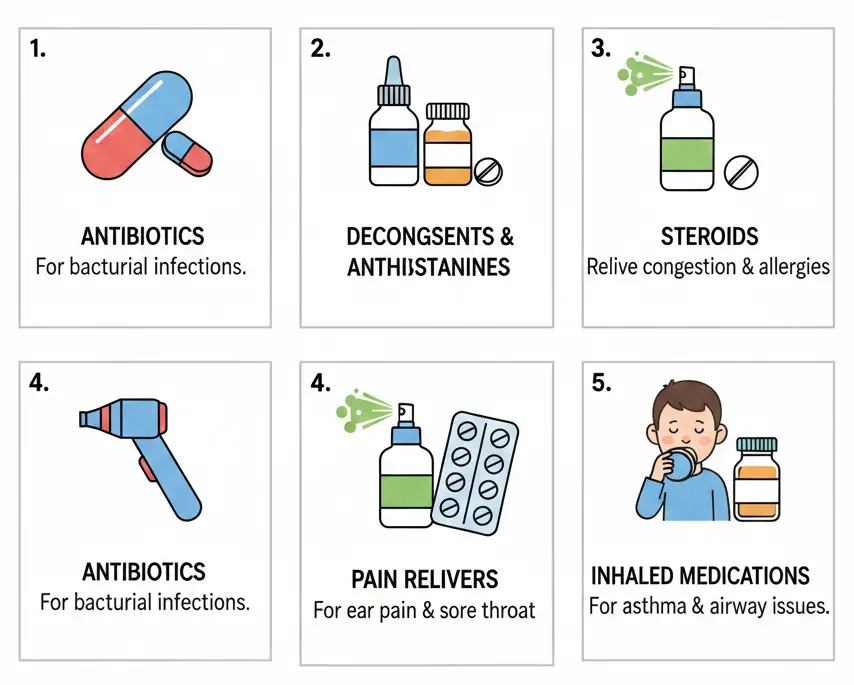
Medical Treatments:
- Antibiotics: Used for bacterial infections, such as in cases of otitis media (ear infections), tonsillitis, or sinusitis.
- Decongestants and Antihistamines: To relieve symptoms of nasal congestion or allergies.
- Steroids: Nasal steroid sprays or oral steroids to reduce inflammation, especially for conditions like sinusitis or severe allergies.
- Pain Relievers: Over-the-counter medications like acetaminophen or ibuprofen to relieve pain from ear infections or sore throat.
Inhaled Medications: For children with asthma or other respiratory issues affecting the throat and airways.
Pediatric ENT Testing
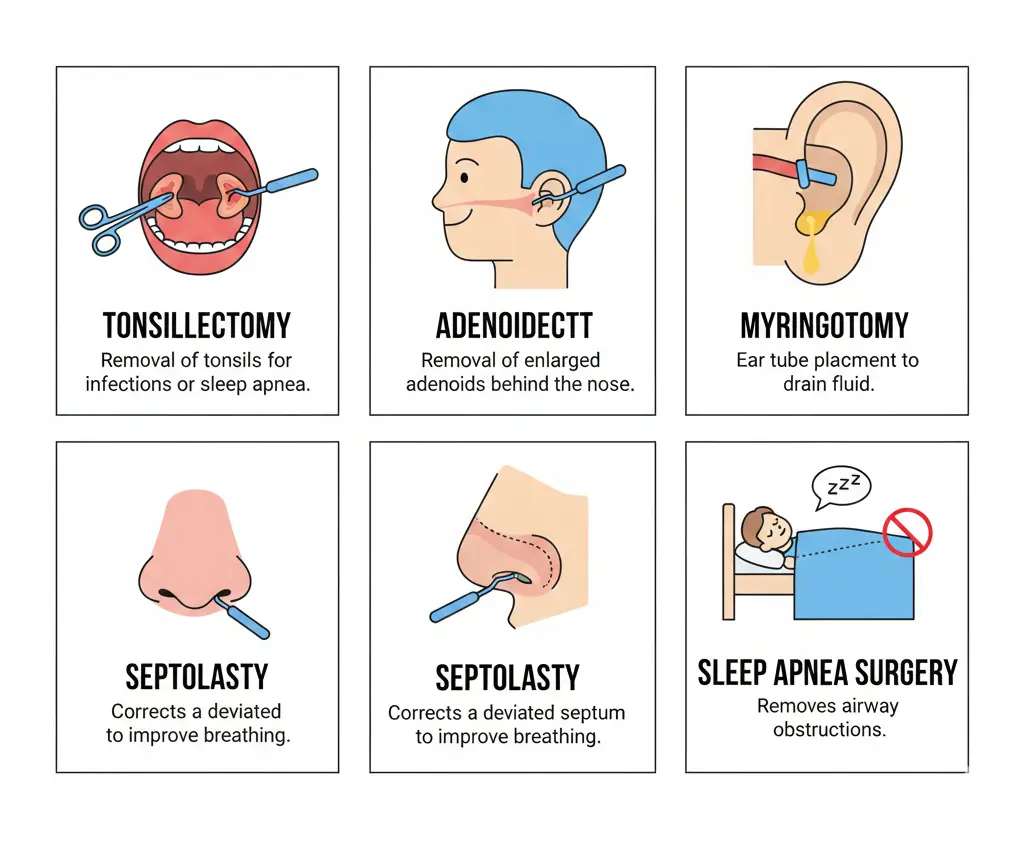
Surgical Treatments:
- Tonsillectomy: Surgical removal of the tonsils, typically for frequent infections or breathing problems like sleep apnea.
- Adenoidectomy: Removal of the adenoids, often done when they are enlarged and causing recurrent ear infections or difficulty breathing.
- Myringotomy: A procedure in which a small incision is made in the eardrum to drain fluid and relieve pressure in the middle ear, often accompanied by the placement of ear tubes.
- Septoplasty: Surgery to correct a deviated septum, improving breathing in children with nasal airway obstruction.
Sleep Apnea Surgery: In severe cases, surgery may be needed to remove obstructions in the airway, such as enlarged adenoids or tonsils.
Our Recent Blogs
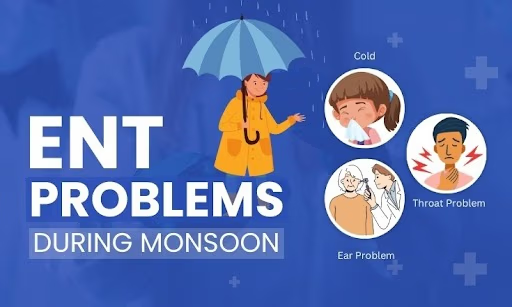
Monsoons are very heartily welcomed and always have brought joy, abundance of life and vegetation but alongside comes illness and

Not everyone will visit an ENT in their lifetime, they never might have been affected or they are blissfully unaware

Children are very resilient. From the age of 6 months to 2 years, a child has a developing immune system

It is the most commonly self diagnosed and self treated condition. It is estimated that one in every 8th person

Snoring is the resultant sound that occurs when two relaxed surfaces collapse into each other during a sleep cycle. Snoring

Have you experienced that nagging or intense pain during take off which settled down over the course of flight only