
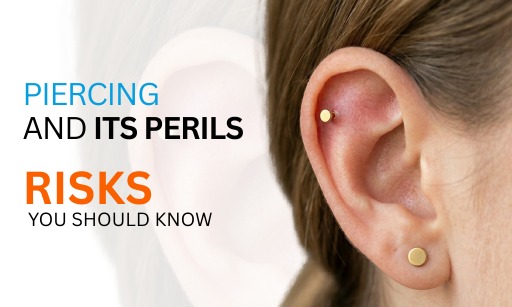
Piercing and its perils
Ear piercings are culturally celebrated and often a rite of passage for children across our country, and they are a beautiful ceremony for many. Nowadays, our bodies have become our playgrounds, and we tend to express ourselves through art we make on our bodies in the form os tattoos or piercings. Whilst expressing individualism and personality traits through body art is beautiful and aesthetically pleasing, it’s also your duty to know the right and safe way to do it, to not only be able to wear it proudly and display it for the intended purpose of its beauty to be displayed and not let it turn into a sore sight for you and the people who see it.
Various modalities are available for piercings
So here I would like to list down the various options available, along with their individual pros and cons, to help you narrow down what is the best option for you
Gun Piercings:
This is what is being widely used in our country across saloons, jewellers, aesthetic clinics, Dermat clinics and ENT Clinics in Gurgaon as well
Pros:
- Quick procedure
- Associated with less pain
- Lesser chances of infection if done in a sterile manner
Cons:
- The backend of the screw can get embedded in the wound
- If done in a bulky area of the ear can strangulate the wound and reduce blood supply, and cause infections
- If proper sterile measures are not applied during the procedure can infect the piercing area or the surrounding area as well.
- Can expect some post-procedure bleeding.
Laser Piercings:
This is not as widely available but is still very prevalent in high end aesthtic clinics and dermatology clinics where they use a numbing cream to numb the area and use a laser to make the piercing.
Pros:
- No or minimal post-procedure bleeding
- A much more sterile and sophisticated way of doing it lesser chances of infections
- Minimal associated pain.
Cons:
- Time consuming
- Pricier option due to the usage of a laser
- Chances of doing it on a child are bleak, as to the amount of precision required by the laser, the movements from an uncooperative child might lead to a stressful procedure or an incomplete one.
Traditional piercings:
This is an age-old method that has been used for centuries, that are done by jewellers in some stalls near temples. They use a hot metal rod that is the same diameter as the desired piercing. The material used is different in different places, but most places generally use gold
Pros:
- Time proven meathod.
- Their efficiency of doing higher numbers everyday make it a simple and hassle-free procedure.
- Lower cost
Cons:
- Associated with some pain and post-procedure bleeding
- Chances of infection if the sterilisation is not proper
- Some jewellers like to use the same rod to pierce, and they twist it at the end before cutting. The twisted end can get buried in the skin and cause infections.
Areas where the most common piercing-related infections happen.
The area where the piercing has been made on the ear can also determine its chances of infection or the severity of the infection if it happens
The softer part of the ear, where most of the traditional piercings are done, has a very low chance of infection and is the least problematic area, whereas cartilage piercings have a higher chance of infection and have the capability of causing infection to the whole of the external ear if not done properly or if the post-procedure care is not good. Nasal piercings, again, the location of the piercing and the way it is done are very important to avoid subsequent infections. If done superficially, it can also lead to multiple post-procedure infections due to constant friction. If done at an extreme depth can cause a lot of bleeding and immediate post-procedure infections.
Appropriate post-piercing care
- Don’t let hair touch the piercing or the ornament
- Choose gold or pure metals to avoid foreign body reactions
- Dont over clean the area post-procedure, and keep it away from moisture and water until the wound heals
- Don’t choose a very snugly fitting design, as it can burrow into the skin and cause infections
- Always use clean hands and fingers whilst applying medication in that area
- Turn the piercing once or twice a day to prevent it from burring itself in the skin
- Remove the piercing immediately if you start suspecting an infection
Signs of infection
- Localised redness
- Smelly or cloudy discharge
- Excessive pain on touching
- Swelling around the area.
- Fever
Do not worry if any of those things do happen. Please visit a local ENT clinic near you as soon as you suspect things are not right, and things can be sorted in a hassle-free manner.